More women are cycling through homelessness for longer periods of time
November 18, 2026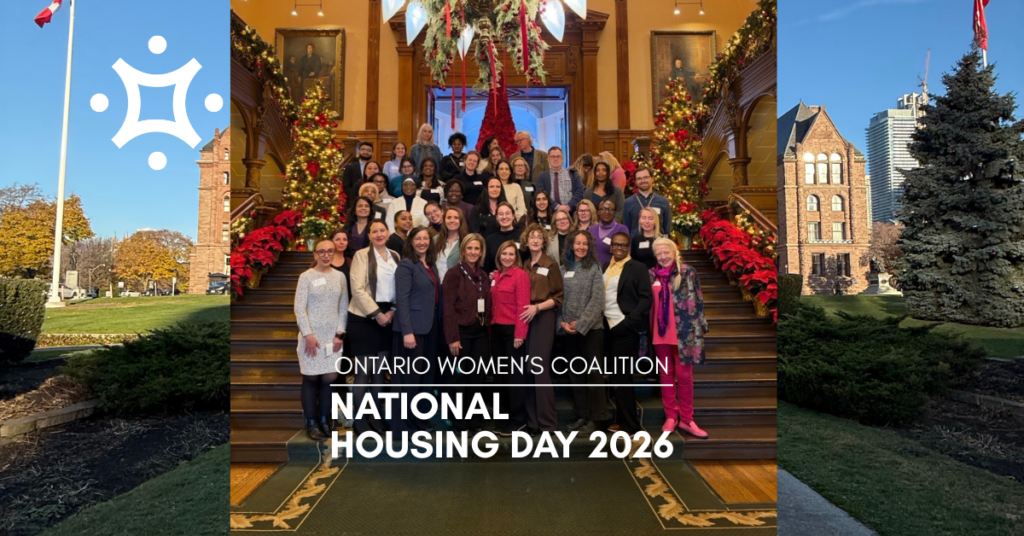
On National Housing Day, the Coalition and allied partners gathered at Queen's Park to call on the province to fund healthcare transitional housing, rent supplements and sustainable operating support.
November 19, 2026
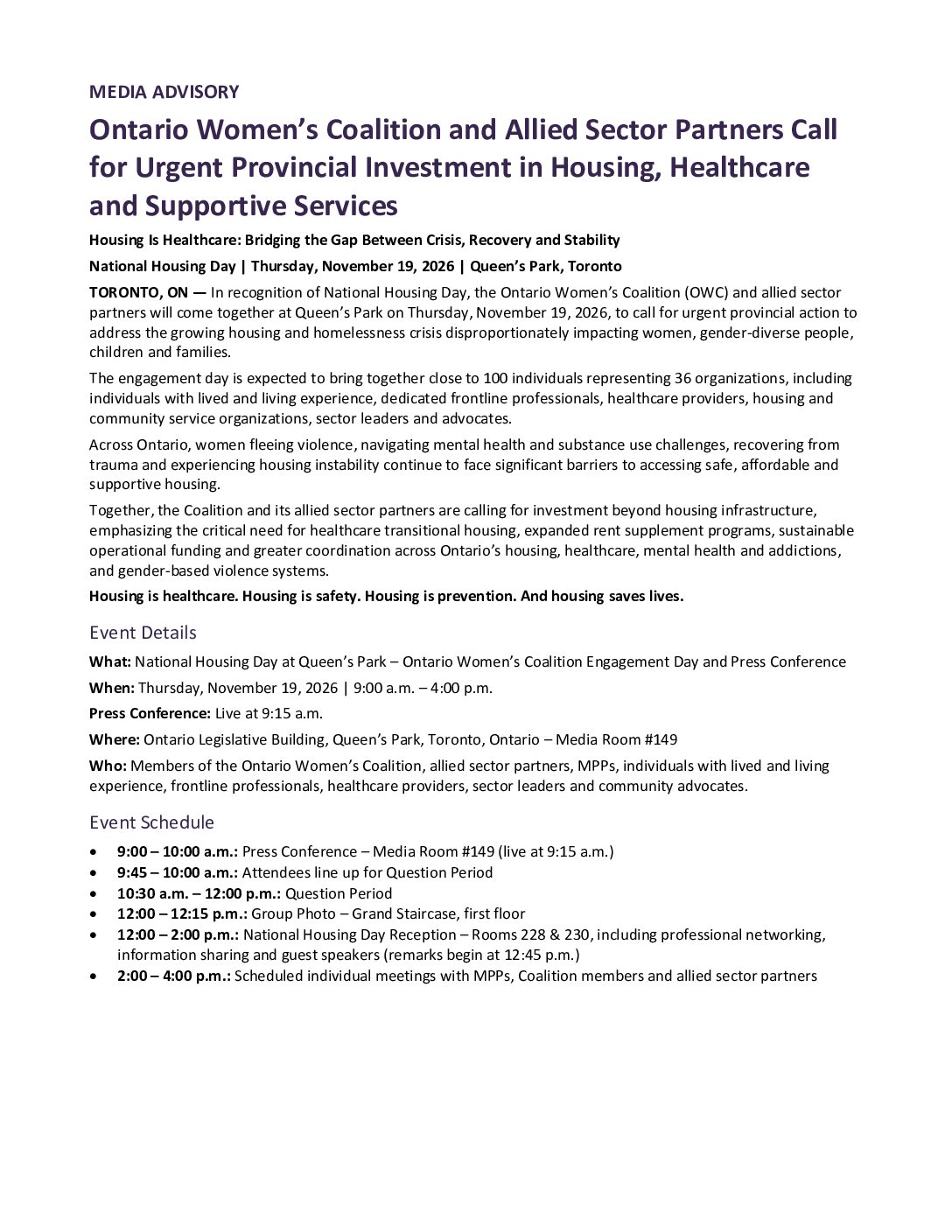
TORONTO, ON. On National Housing Day, the Ontario Women's Coalition (OWC) and allied sector partners gathered at Queen's Park to call for urgent provincial action on the housing and homelessness crisis. The crisis disproportionately affects women, gender-diverse people, children and families.
The engagement day was planned to bring together close to 100 people from 36 organizations. They included people with lived and living experience, frontline professionals, healthcare providers, housing and community service organizations, and sector leaders. The day included a press conference, Question Period, a reception, and scheduled meetings with MPPs.
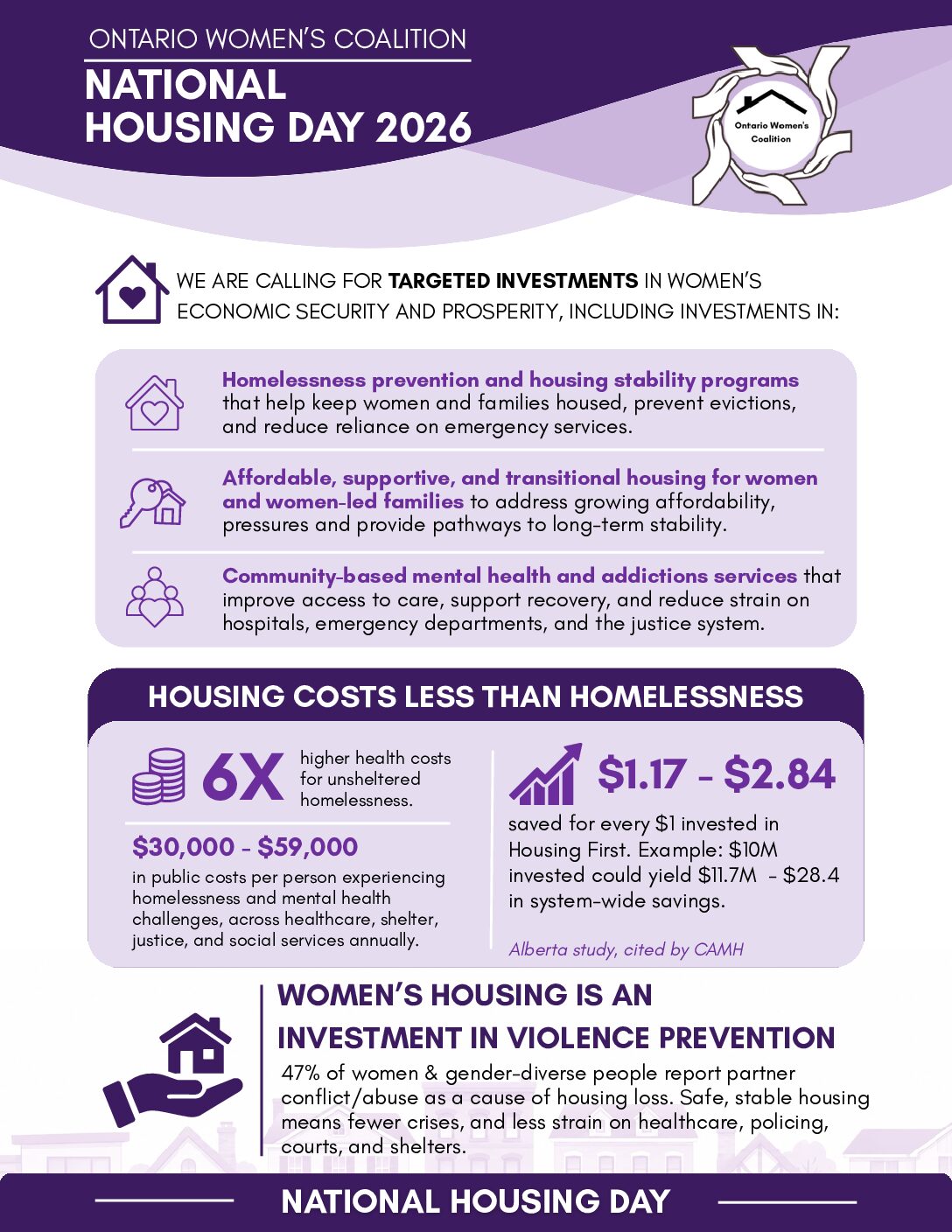
Under the theme Housing Is Healthcare: Bridging the Gap Between Crisis, Recovery and Stability, the Coalition said that women fleeing violence, navigating mental health and substance use challenges, and recovering from trauma continue to face major barriers to safe, affordable and supportive housing. It is calling for investment beyond housing infrastructure, including healthcare transitional housing, expanded rent supplements, sustainable operational funding and better coordination across Ontario's housing, healthcare, mental health and addictions, and gender-based violence systems.
The Coalition's three calls to action
- Invest in healthcare transitional housing and recovery-oriented services, with funded pathways between hospitals, treatment, gender-based violence services and safe transitional housing.
- Expand gender-responsive housing and affordability programs, including women-specific supportive housing, rent supplements and homelessness prevention.
- Strengthen provincial coordination through an integrated continuum of care so people don't fall through systemic gaps.
"Discharge from hospitals, emergency departments or community-based healthcare organizations should never mean discharge into homelessness," said Belinda Marchese, OWC Co-Chair and Executive Director of The Jean Tweed Centre. "The question is not simply what it will cost Ontario to invest in housing and supportive services, but what it is costing Ontario not to."
OWC Co-Chair Karen Waddell, Executive Director/CEO of House of Sophrosyne, said that "lasting recovery starts with a safe, stable place to heal." She added that traditional shelter systems aren't enough for women experiencing homelessness.
Dr. Leslie Buckley of the Centre for Addiction and Mental Health (CAMH) said that investing in housing alongside community-based mental health and addictions services can improve health outcomes and reduce repeated crisis intervention and justice system involvement.
Why it matters
- Homelessness in Ontario increased by 49.1% between 2021 and 2025.
- More than 36,000 people are waiting for mental health and addictions supportive housing, with an average wait of nearly four years.
- 301,340 households were on rent-geared-to-income waitlists in 2025, with an average wait of more than five years.
- In the first six months of 2024, the median age of death among women experiencing homelessness in Toronto was 36.
- Supportive housing costs approximately $2,000–$5,000 per person per month, compared with approximately $31,500 in a psychiatric hospital.
- Housing First research found people with housing assistance and ongoing supports spent 73% of their time in stable housing, compared with 32% among those receiving usual services.
- 84% of surveyed shelters named inflation and rising costs as major challenges.
[Optional, for Cornerstone: Cornerstone Housing for Women is a member of the Ontario Women's Coalition. Add a sentence on your team's participation here.]
About the Ontario Women's Coalition
The OWC is a voluntary, non-partisan alliance of women's shelters, housing providers, and healthcare and community service organizations across Ontario. It advocates for trauma-informed, culturally safe and gender-responsive housing, healthcare and integrated supports.
Media contact: Diane Presta, Director, Fund Development & Communications, The Jean Tweed Centre, diane.presta@jeantweed.com, 416-712-4295