
Names, pronouns, and respect: Why seemingly small things matter
August 25, 2026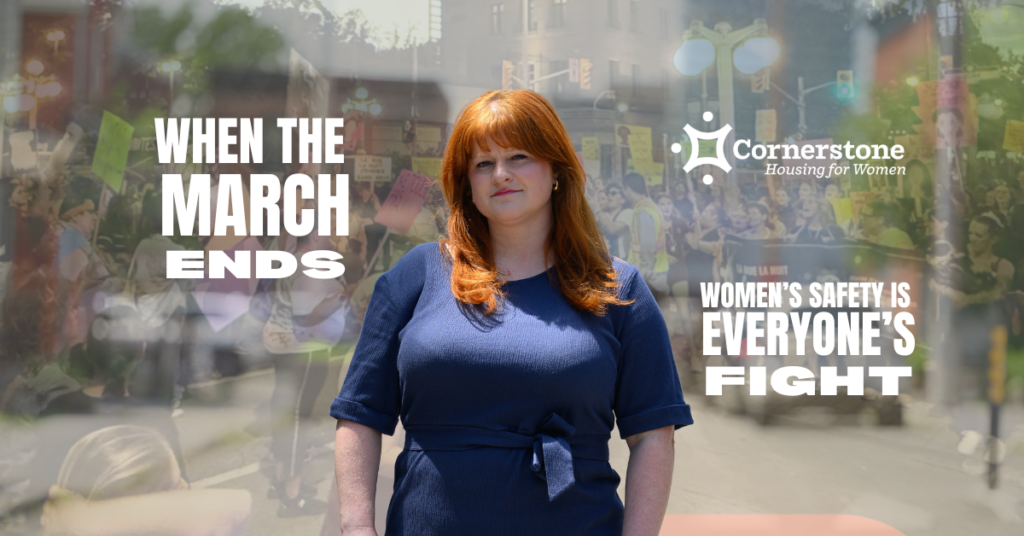
When the March Ends: Why Women’s Safety is Everyone’s Fight.
Take Back the Night is an event that reminds us of the important realities that women face every day: gender-based violence. And intimate partner violence. This is an event that started back in the 1970s. And it’s an important one; it helps us reclaim safety and highlights this is an issue that is not getting better.
At Cornerstone’s shelter, this reality is not abstract. Ninety per cent of the 165 women and gender diverse people who stay at our shelter report having experienced sexual violence. Indigenous women are three times more likely to experience gender-based violence than non-Indigenous women. Gender diverse and nonbinary people also face disproportionately higher rates of violence.
This urgency is felt painfully local here in Ottawa. On August 6, the Ottawa Police Service released a statement outlining that they had received 150 reports of sexual assault from June 1 to August 6, and that sexual assault reporting had increased by twenty-five per cent compared to years prior. Recently, Public Safety Canada noted that intimate partner violence with a gun was increasing. Shootings are the second most common form of death from intimate partner violence.
Across the world, access to essential healthcare services for women is declining due to a number of reasons, including lack of funding, conflict or displacement, and economic instability, to name a few. These challenges limit access to healthcare; sexual and reproductive health care, gender-responsive health care. Women also have to contend with the stigma, shame, and discrimination that comes with sexual violence.
Addressing these issues requires systemic change, including more investment in survivor-led programming and initiatives, effective education and prevention methods, and laws that protect women. Communities need to come together and target harmful stigmatizing attitudes and beliefs that perpetuate gender-based violence and inequality.
All of this paints a bleak picture, but I have hope. And there are things to celebrate too.
Help us keep Take Back the Night as more than a march; it is a mandate and a call to action for each of us to turn our solidarity and allyship into sustained action.
Local: Show up to Ottawa’s Take Back the Night rally and march. Volunteer with or donate to frontline organizations who support women experiencing gender-based violence. There is an election coming up; ask our candidates what they plan to do about gender-based violence.
Provincial: Demand more funding for violence against women shelters and housing support and services
National: Demand full funding and implementation of Canada’s National Action Plan To End Gender-Based Violence and hold all levels of government accountable for measurable progress on it.
Stay informed
These are some of the resources available to help us better understand gender-based violence and how we can support survivors:
-
UN Women: Facts and figures: Ending violence against women
-
BWSS: How can I help my friend?
-
Aura Freedom International: A grassroots nonprofit that provides information and advocacy reporting on gender-based violence
Take Back the Night gives us an opportunity to come together, but the work does not end when the march does. If we want safer communities, we all have a role to play and that role must go beyond this night.
Anne Marie Hopkins, Executive Director