A Joint Statement in Solidarity with Survivors of GBV and Communities
August 5, 2026
When the March Ends: Why Women’s Safety is Everyone’s Fight
September 16, 2026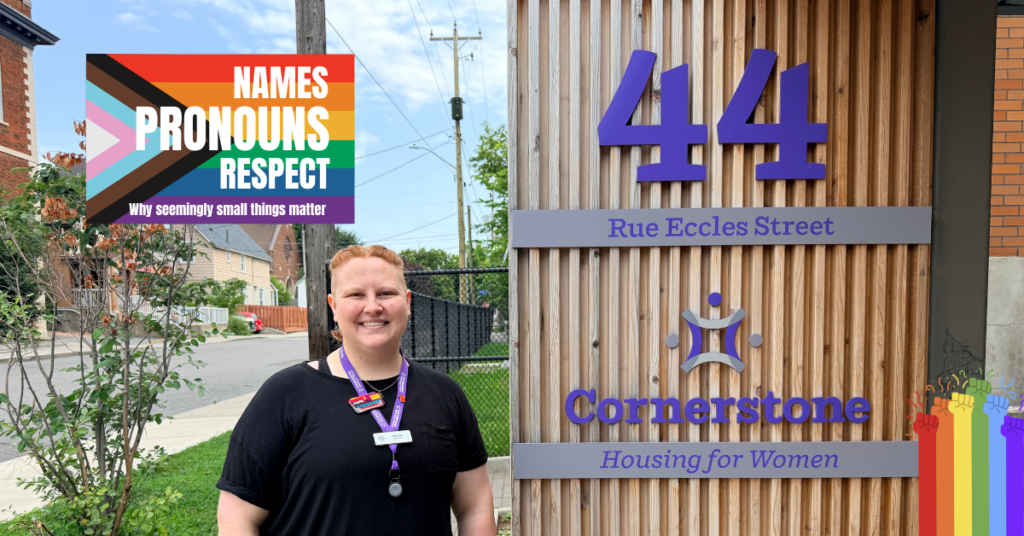
As Ottawa Pride approaches, I've been reflecting on the small things we can do to show the 2SLGBTQ+ service users at Cornerstone Housing for Women that they are loved. I am a support worker at Cornerstone, and every day I see how small gestures matter. Things like holding a door open or smiling when someone enters the building can add up to help residents feel respected and like they belong. Many of us know what it feels like to not fit in, and like many of our queer and gender-diverse service users, I have felt out of place because of my gender identity. I am non-binary. This means I don't identify as a man or a woman, but somewhere outside the gender binary.
Here is what we know from our own data. Currently, 3% of our service users at the shelter and 11% across our supportive housing locations identify as gender-diverse. These figures only capture people who have felt safe enough to disclose their gender identity to staff and have it recorded in their files. They don't include anyone questioning their gender identity, or anyone who doesn't feel safe identifying themselves at all. As a gender-diverse staff member, I've had the privilege of speaking with service users who are not yet ready to come out, so I know the real numbers are likely higher than our data shows.
So, what are small things we can do to increase feelings of safety and belonging for the gender-diverse people in our community? One small but impactful daily decision we can make is using people's correct names. Think of it like this: have you or someone you know ever gone by a nickname instead of their given name? Perhaps you know a David who only goes by Dave. To Dave, being called "David" can feel official, disconnected, or even disciplinary. There's a sinking feeling of "uh-oh, I'm in trouble." Using the name someone asks you to use, regardless of their gender identity, builds safety, rapport, and respect. It is a small way to show that you care and are listening.
Another small thing we can do is try to use people's correct pronouns. This means referring to people with the pronouns they ask us to use, whether it's "she," "him," "they," or something else entirely. If someone appears to you to be feminine but asks you to use he/him pronouns, you respect that request even if you don't think the pronouns fit the individual. Ultimately, it does not matter if your perception of someone matches the language that makes them feel best in their skin. If using someone’s correct pronouns is something you have difficulty with, I encourage you to ask yourself why. Is it a language barrier, your beliefs, or habit? Is it worth making extra effort if it means someone feels safe and supported instead of being afraid and alone? It may take time and effort to change patterns of thinking, but if the result is someone feeling loved, I think it's worth the work.
As Pride celebrations in Ottawa begin, I ask you to remember that respect is not one grand gesture. It is a held door, a smile, a correct name, or a correct pronoun used - even if it takes some thought.
By Char Wessel